
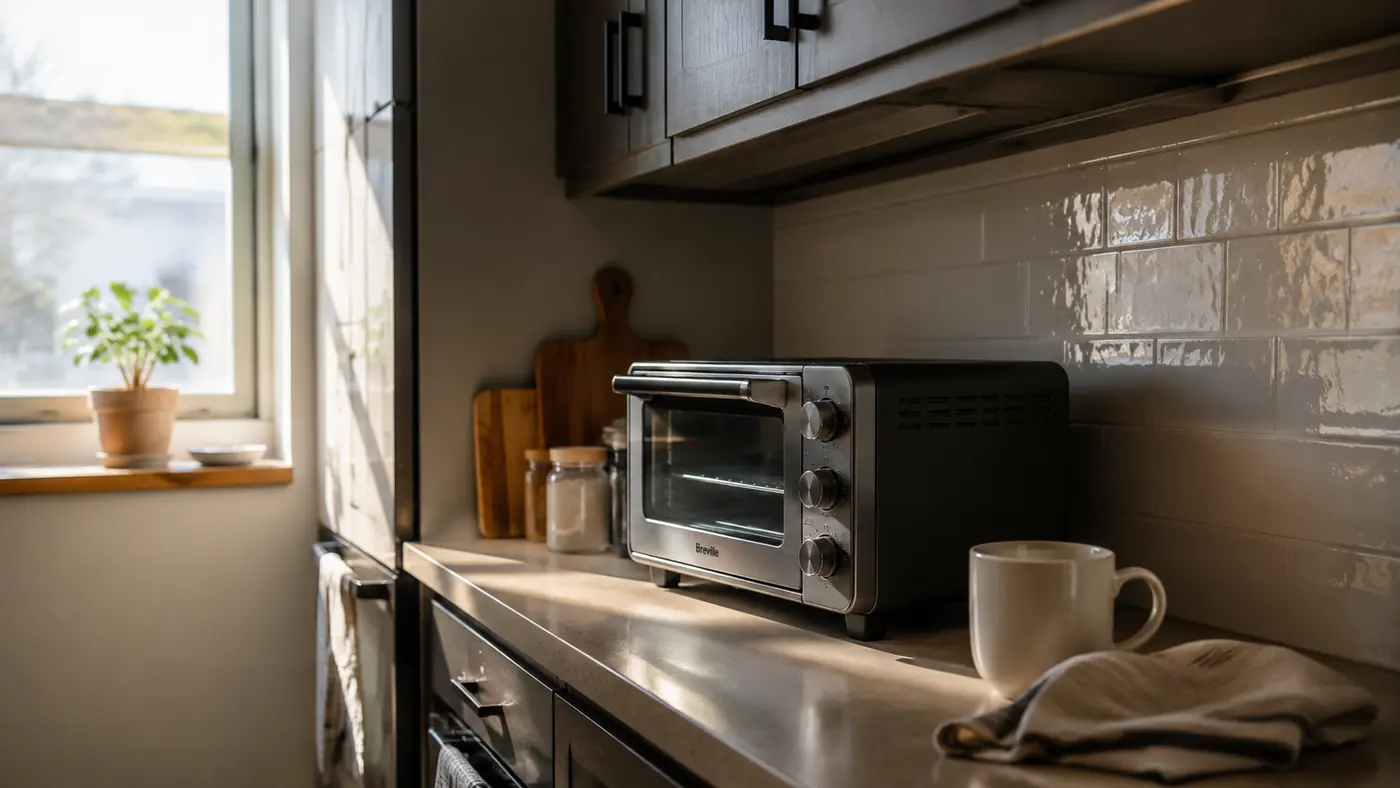
I bought the DASH Mini Toaster Oven in November, right after my old full-size toaster oven died on Thanksgiving morning of all days, which is its own story I won't get into here. I needed something fast, something that would actually fit on my three feet of usable counter, and something that wouldn't hog one of my two outlets for an appliance I only used twice a week. Six months later, it's still sitting on the same corner of my counter, still gets used almost every single day, and I've had enough time with it now to tell you what actually happens to a small toaster oven once the new-appliance shine wears off.
This isn't a first-week impressions piece. This is what I've learned from roughly 170 mornings and evenings with it, one badly scorched crumb tray in February that scared me more than it should have, a stretch in March where I baked small trays of cookies for Danny's birthday almost every night, and a lot of very ordinary weeknights reheating leftovers instead of dirtying a pot. I want to walk through what living with the DASH Mini Toaster Oven actually looks like once it stops being a new purchase and starts being just another thing you use without thinking about it, because that's the only test that actually matters in a kitchen this small.
The Quick Verdict
Six months in, this is the appliance I reach for more than any other single thing in my kitchen. Small footprint, reliable heat, and it never once made me wish I'd bought the bigger version.
Amazon Check Today's Price →Still Toasting Every Morning After 6 Months, Here's Why It Never Got Retired to a Shelf
If you're trying to figure out whether a mini toaster oven can genuinely replace a full-size one in a kitchen with almost no counter to spare, this is the one that's actually stayed plugged in at my place.
Amazon Check Today's Price on Amazon →How I've Used It Every Week for Six Months
My kitchen is a narrow galley with two outlets, and both of them sit right behind where my dish rack usually is, so anything that lives on my counter has to justify itself daily or it gets banished to a cabinet. The Mini Toaster Oven takes up less space than my old coffee maker did, which is honestly what sold me on it before I ever plugged it in. It fits four slices of bread or a personal-size pizza, and that has turned out to be exactly the right capacity for cooking for myself most nights and for two when Danny's over and we're splitting reheated takeout instead of ordering fresh.
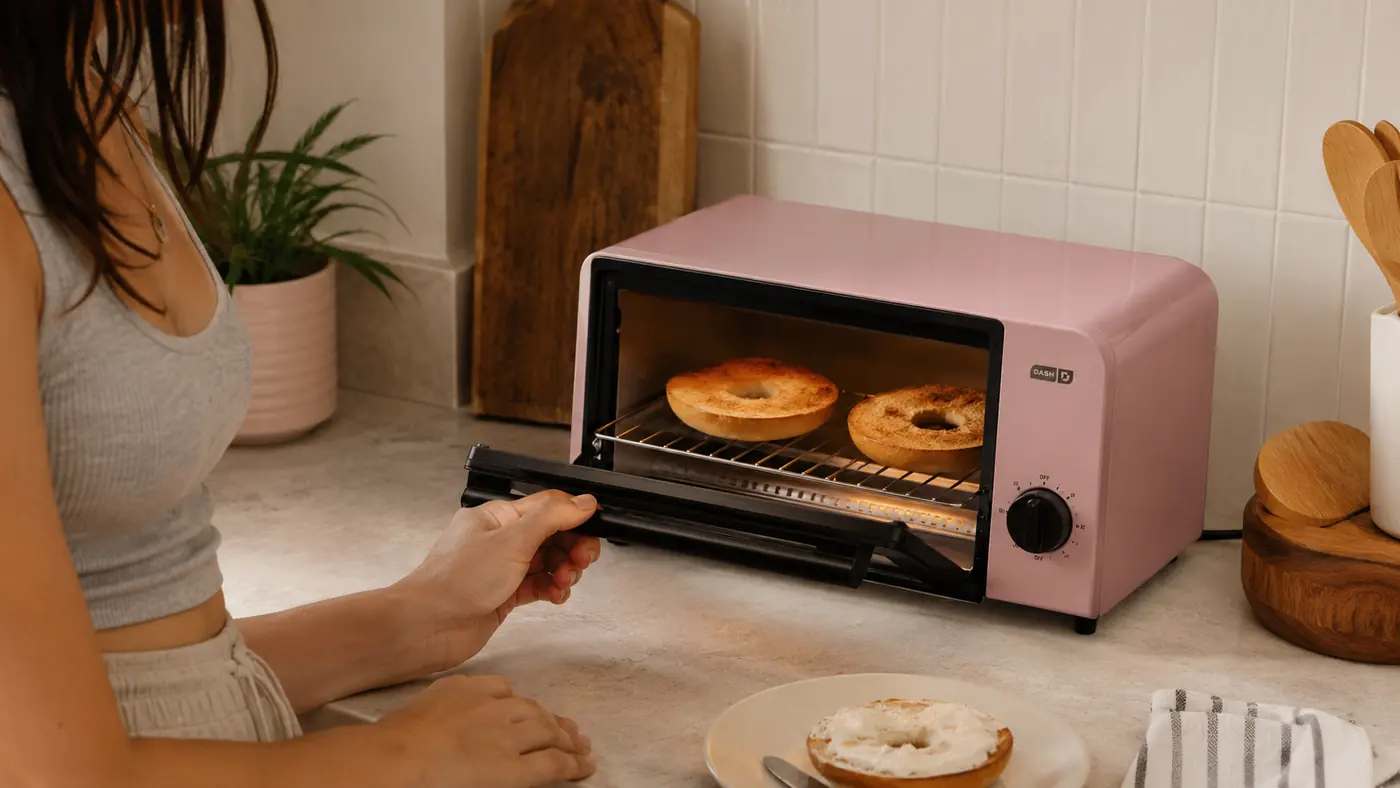
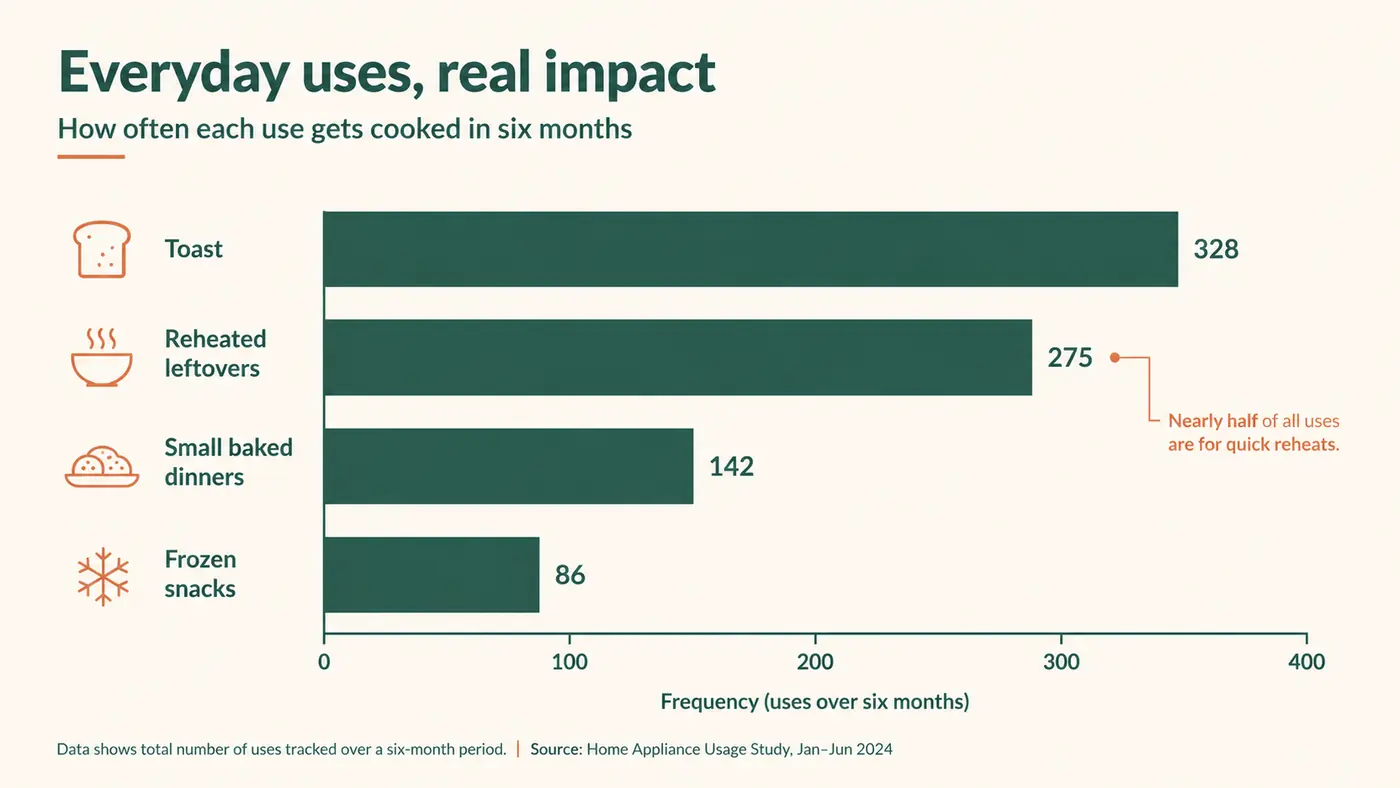
In an average week, I use it somewhere between eight and ten times, which surprised me when I actually counted. Mornings are toast, bagel halves, or a frozen waffle when I'm running late. Evenings are usually reheated leftovers, since it does a noticeably better job than the microwave at not turning pizza crust into something rubbery. On weekends I've used it for small baking projects, a single-layer tray of cookies, garlic bread, or roasted vegetables for two, which is more than I expected from something this compact. If you're deciding between this and something bigger, I put together a closer side-by-side look in Dash vs. Black+Decker for anyone weighing capacity against counter space directly.
The interior has a light nonstick coating on the crumb tray and rack, and I was genuinely worried in the first month about how it would hold up to daily use. It's held up fine. Toast crumbs and the occasional cheese drip wipe out easily as long as I don't let them bake on overnight, which brings me to the one real incident worth mentioning.
The Crumb Tray Scare, and What I Changed After It
In February, I went almost three weeks without pulling the crumb tray out to clean it, which in hindsight was a mistake I won't repeat. I noticed a faint burning smell during a normal toast cycle, opened the door, and found a small buildup of crumbs had darkened enough to start smoking slightly at the bottom of the unit. Nothing caught fire, nothing was damaged, and a quick wipe-down with the tray removed and cooled solved it in under five minutes. But it scared me enough that I now pull the tray out and dump it once a week without exception, usually on Sunday when I'm already cleaning the rest of the kitchen. That single habit change has made the whole appliance feel completely reliable again, and it hasn't repeated once in the four months since.
The Daily Routine, Six Months In
Here's what a typical weekday morning looks like now. I fill the kettle, drop bread or a bagel into the DASH Mini Toaster Oven, and by the time I've made coffee it's done. The whole unit stays plugged into the outlet closest to the stove permanently. I don't unplug it or store it between uses, which is a decision that took me about two weeks to settle into. Early on I tried tucking it back into a lower cabinet after breakfast to keep the counter looking clear, and that lasted exactly as long as it took me to realize pulling it out and resetting the temperature dial every single morning was more friction than I wanted before 7 a.m.
The controls are two dials, one for temperature and one for a timer that rings and shuts off automatically, plus a toast-shade selector. No digital display, no presets, nothing that can glitch. Six months of daily use hasn't made either dial feel loose or unreliable, and the auto shutoff at the end of a cycle has never once failed to trigger, which matters to me since I've absolutely burned toast in other appliances by walking away and forgetting about it.
Cleaning and What It Actually Takes to Maintain
This is the part most reviews skip, and it's the part that determines whether an appliance actually survives long-term in a small kitchen. My routine settled into something simple after the crumb tray incident: pull and empty the tray every Sunday, wipe the interior walls with a damp cloth if there's any grease splatter, which is rare since most of what I make in it is toast or reheated leftovers rather than anything greasy. The whole process takes maybe two minutes and I've never once been tempted to skip it now that I know what happens if I do.
The exterior has needed almost nothing beyond an occasional wipe. Because it's mostly used for toast and reheating rather than roasting fatty meats, grease buildup has stayed minimal compared to what I dealt with in my old full-size unit, which used to leave a faint film on the counter around it no matter how often I wiped it down.
What Wore In vs. What Wore Out
Nothing has broken. The door hinge still closes with the same amount of resistance it had in November, no sag, no rattle. The power cord hasn't developed any stress cracks near the plug, and the heating elements still glow evenly across the full width rather than favoring one side, which was a problem I had with a cheaper toaster oven years ago. The one small thing I'll flag is that the toast-shade dial has gotten slightly harder to turn, enough that I notice a bit more resistance than I did on day one, though it still lands accurately on the setting I want.
What changed most over six months was my own sense of timing. In the first few weeks I was setting the timer based on the numbers printed on the dial rather than watching through the window, and that gave me a few rounds of toast that were darker than I wanted. Once I started actually watching the first cycle or two for anything new I put in it, from garlic bread to leftover fries, results got a lot more consistent. That's less about the appliance and more a note for anyone buying their first small toaster oven: give yourself two or three cooks before you fully trust the dial settings.
How It Compares to the Full-Size Oven I Used to Turn On for Everything
Before this, if I wanted toast, reheated leftovers, or a small tray of anything, I turned on my full-size wall oven, which meant preheating for ten minutes and heating up my entire kitchen for a task that took two minutes' worth of food. Switching to the DASH Mini Toaster Oven for those small jobs has genuinely changed how I cook on an average weeknight. I'm not turning on the big oven nearly as often, my kitchen doesn't heat up in the summer the way it used to for small reheats, and I've noticed a small but real difference in my electricity habits since a countertop appliance this size uses a lot less energy than a full oven for the same small job.
If you're weighing whether a compact toaster oven like this one can genuinely replace turning on a full-size oven for everyday cooking, I wrote a broader breakdown of the tradeoffs in 10 reasons mini toaster ovens beat full-size ovens for small kitchens specifically. The short version from six months of actually living with this one: for someone cooking for one or two people most nights, the smaller footprint and the fact that I don't have to heat up my whole kitchen for toast has been worth more than any extra capacity a bigger oven would have given me.
What I Liked
- Still used almost daily six months in, with no drop-off in how often I reach for it
- Interior coating has held up well to weekly cleaning with only normal light wear
- Manual dials have stayed accurate and haven't loosened in a way that affects the settings
- Small enough to live permanently on a narrow counter without crowding prep space
- Auto shutoff timer has never once failed to trigger at the end of a cycle
Where It Falls Short
- Needs the crumb tray cleaned weekly or buildup can start to smoke during a cycle
- Toast-shade dial has gotten slightly stiffer to turn after six months of regular use
- Four-slice capacity means multiple rounds for anything beyond one or two servings
- No digital display or presets if that's something you're used to in a newer appliance
Who This Has Actually Worked For
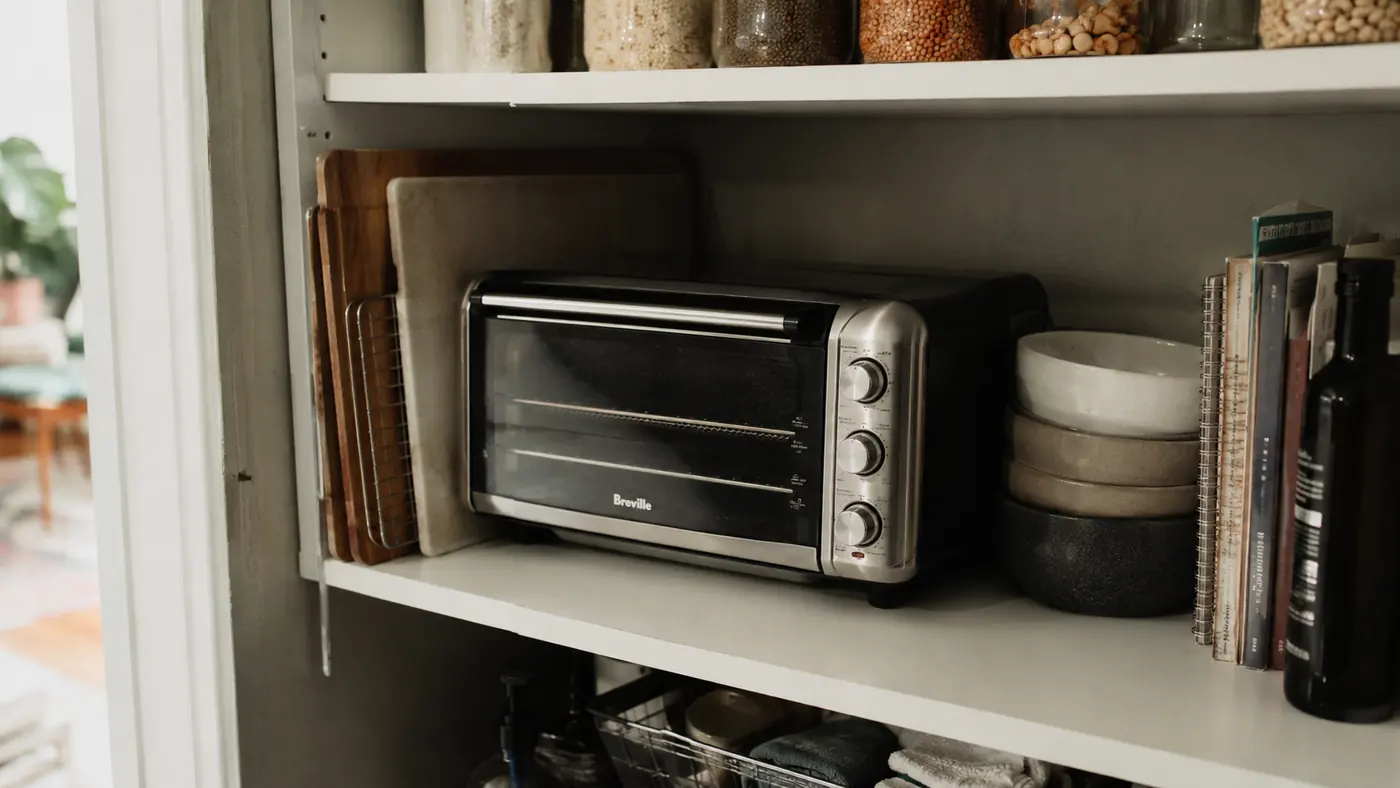
This has been the right appliance for someone cooking for one or two people in a kitchen where counter space, not cooking capacity, is the real limiting factor. If you're regularly toasting or reheating for a family of four or more, four slices at a time is going to mean multiple rounds every morning, and that adds up when everyone's trying to get out the door. But for my apartment, where the alternative was turning on a full-size oven for two minutes' worth of food, the smaller capacity has been exactly the point rather than something I've had to work around.
It's also worked well for the way I actually cook day to day, which is mostly toast, reheating, and the occasional small baking project rather than anything ambitious. If your use is going to be mostly bagels, leftovers, frozen snacks, and small trays of vegetables or cookies, the DASH Mini Toaster Oven has handled every one of those categories consistently over six months without me thinking twice about it.
The real test of a small-kitchen appliance isn't how it toasts the first week, it's whether you're still reaching for it every single morning six months later.
Who This Is For
If you're in an apartment, a condo, a dorm, or anywhere with limited counter and cabinet space, and you're cooking for one or two people most days, this has been a genuinely reliable daily appliance for me. It's light enough to move if you need the outlet for something else, and small enough that it doesn't dominate a narrow counter the way a full-size toaster oven would. Six months of daily use, including the one cleaning mistake I made and fixed, suggests this holds up under actual use rather than just looking good in the first week.
Who Should Skip It
If you're regularly cooking for a bigger household or you need a full oven's worth of capacity, four slices at a time is going to feel small fast, and you'll be running multiple rounds constantly. I'd also say skip it if a digital display and preset buttons matter to you, since this is two manual dials and nothing else. And if counter space genuinely isn't a constraint in your kitchen, a larger countertop oven might actually serve you better long-term simply because you'd be doing fewer rounds for the same meal.
Six Months Later, Still the First Thing I Reach For Every Morning
If your kitchen has the same space problem mine does, this is the one small-kitchen appliance that's actually earned a permanent outlet on my counter instead of a spot in a cabinet.
Amazon Check Today's Price on Amazon →