

I bought the Keurig K-Mini Mate in January because my old drip coffee maker finally died and I was not about to replace a nine-cup machine with another nine-cup machine when it's usually just me, or me and my partner Danny, drinking coffee in a kitchen with three feet of usable counter and two outlets. Six months later, it's still sitting in the same spot on my counter, and I've used it every single morning except for maybe a dozen days when I was traveling. That's the honest baseline for this review. I'm not writing this after a week of testing it out. I'm writing this after roughly 170 brews, one clogged needle that had me genuinely worried I'd bought a lemon, and a whole lot of mornings where this little machine was the only thing standing between me and being a functional human before 7am.
This is a long-term use review, not a first-impressions post. I already know what it feels like to unbox a coffee maker and be charmed by how small it is. What I want to cover here is what daily life with the Keurig actually looks like once that novelty wears off, whether the reservoir situation is as annoying as people warn you it will be, whether the internal parts hold up to being run every single day, and whether I'd still buy this specific one if my old drip maker died again tomorrow.
The Quick Verdict
Six months in, still the first thing I turn on every morning. Small footprint, dead simple to use, with one real maintenance habit you have to actually keep up with.
Amazon Check Today's Price →Still Brewing Every Morning After 6 Months, Here's What Held Up
If you're deciding between a full-size drip machine and something that actually fits a small kitchen, the K-Mini Mate has been the one appliance in my apartment that never got shoved into a cabinet.
Amazon Check Today's Price on Amazon →How I've Actually Used It
My kitchen is a narrow galley with two outlets that both sit behind where my dish rack usually lives, so anything I buy has to earn its spot on the counter or it disappears into a cabinet and never comes back out. The K-Mini Mate is about as narrow as a coffee maker gets, roughly the width of a paper towel roll, which sounded almost too small when I read the dimensions, but in practice it's the reason I could keep it plugged in permanently without crowding the strip of counter I actually use for prep. I measured before I bought it, because I've made that mistake before with a slow cooker that ended up too wide to sit next to my knife block, and this one tucks into the corner by the stove without stealing space from anything else.
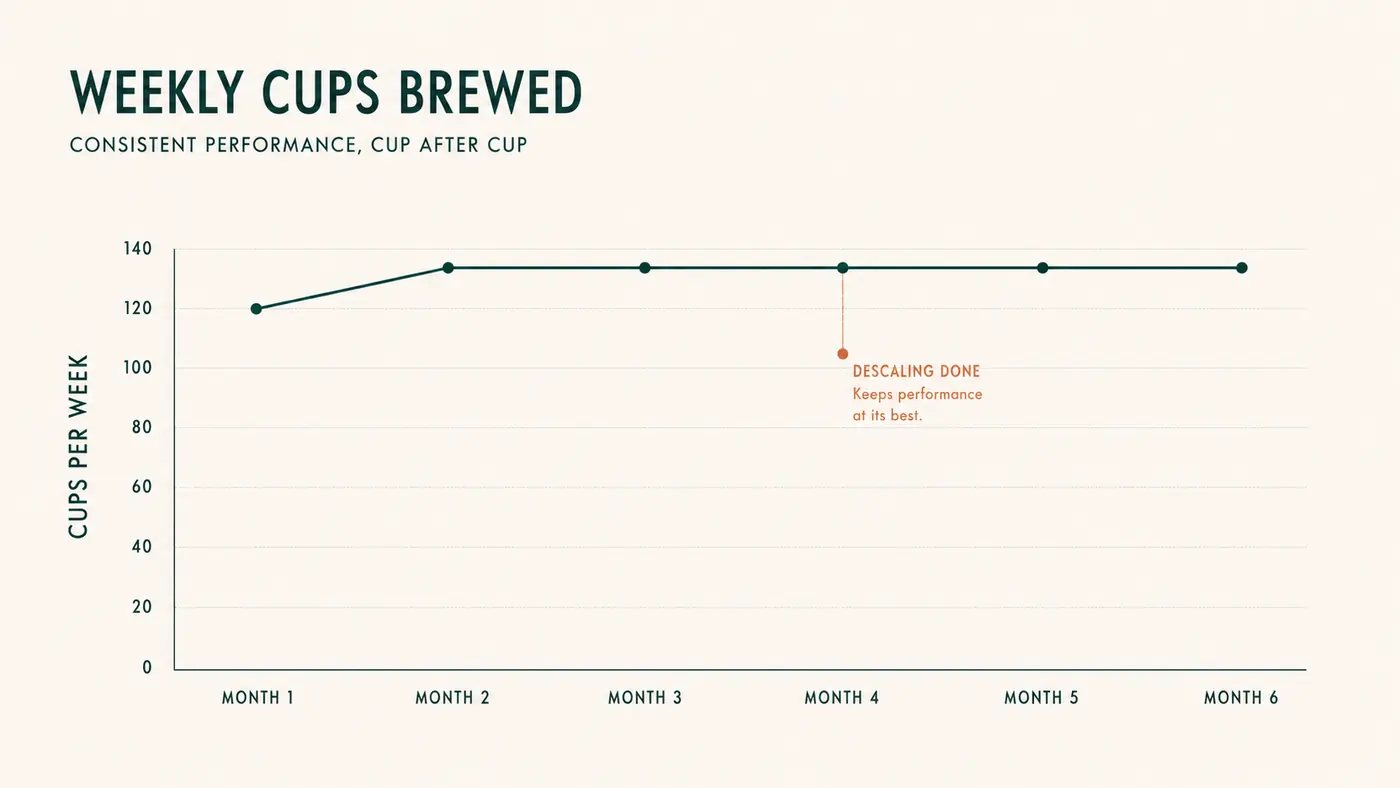
In an average week I brew somewhere between ten and fourteen cups, almost always one at a time, first thing in the morning before I've fully committed to being awake. Danny drinks coffee too, though he's more of a pour-over person on weekends when he has the patience for it, so the K-Mini Mate mostly handles weekday mornings for both of us back to back rather than one big pot sitting around getting bitter. It has never once felt like a novelty appliance I forgot about after the first month, which is more than I can say for the panini press that's currently living in a box under my bed. If you're comparing this against other single-serve options for a tight kitchen, I put together a closer look at how it stacks up in Keurig vs. Nespresso Vertuo for anyone weighing the two side by side.
The reservoir is the part everyone warns you about, and I want to be straightforward about it because the warning is fair. It holds enough water for one brew, sometimes barely two if you're doing a smaller cup size, so if you're making coffee for both of us in the same window I'm refilling it at the sink between cups. Once I accepted that this was the tradeoff for the footprint, it stopped bothering me. It takes about ten seconds to refill, and I do it while I'm already standing at the sink rinsing the mug from yesterday, so it's folded into a routine rather than a separate chore.
The Daily Routine, Six Months In
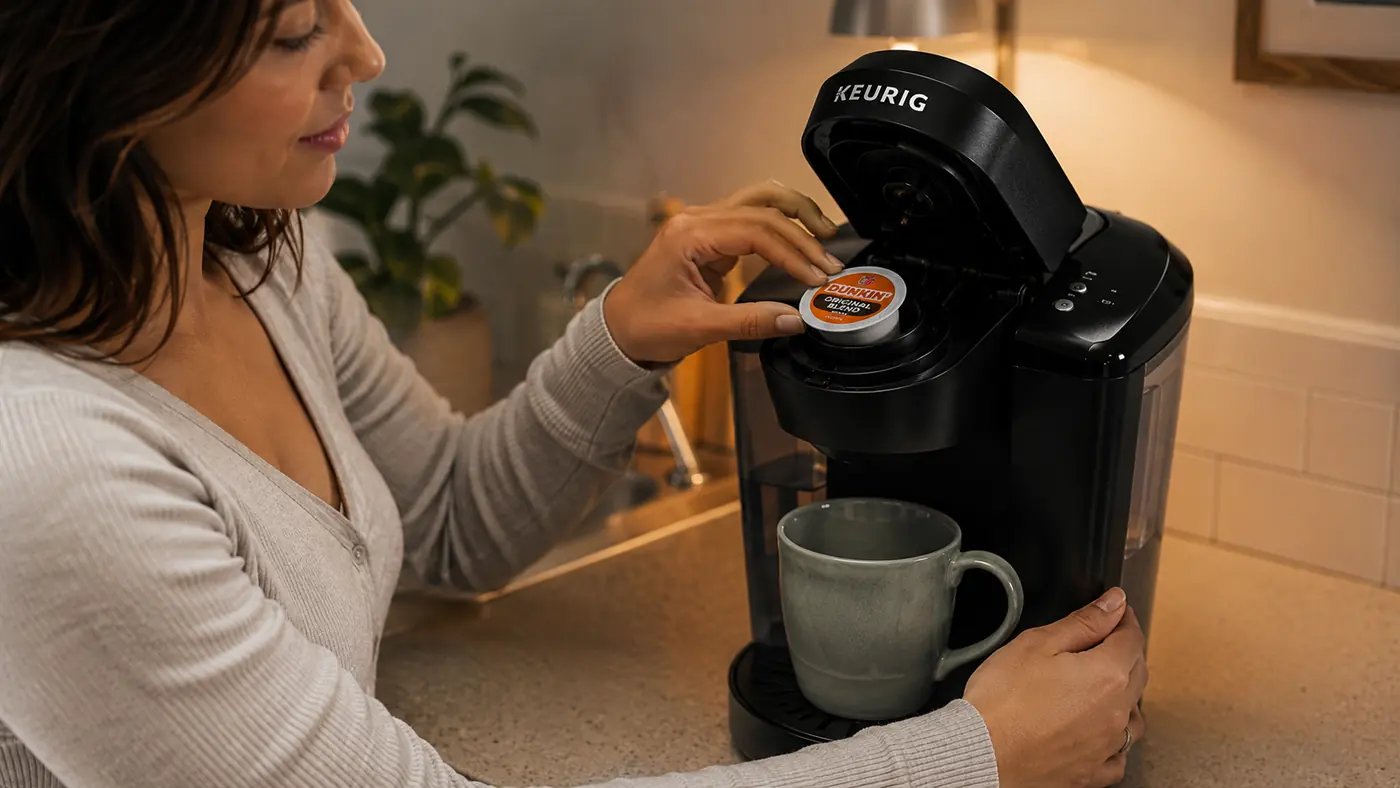
Here's what a typical Tuesday looks like. I get up around 6:15, fill the reservoir, drop in a pod, and by the time I've brushed my teeth and found real clothes the Keurig has already finished brewing and shut itself off. The whole unit sits on my counter permanently now, plugged into the outlet closest to the stove, and I no longer unplug it between uses the way I did the first couple of weeks out of some habit from my old machine. That decision alone tells you something about how little friction this thing adds to a morning that's already moving fast.
The controls are about as simple as it gets, a single button and an indicator light, no touchscreen, no app, no programmable timer. Six months of daily use hasn't made the button feel loose or the internal pump sound any different than it did in January. The one thing that did change my routine was learning to leave the lid open for a minute after brewing instead of closing it right away, since closing it while it's still warm seemed to be part of what led to the clog I ran into around month four. Small habit, but it's made a real difference in how consistently the machine runs since I started doing it.
Cleaning and Maintenance, Six Months In
This is the part that usually gets skipped in reviews, and it's the part that actually determines whether a single-serve coffee maker survives daily use in a small kitchen. My routine settled into something simple after the first month: rinse the reusable mug we use most mornings right after drinking, wipe the drip tray about once a week, and empty the used-pod area whenever it starts to feel full rather than letting it pile up. It takes maybe two minutes total most days, short enough that I've never been tempted to skip it.
The one real maintenance event happened around month four. The Keurig started sputtering mid-brew and producing weaker, slower coffee, and after some searching I figured out the needle that punctures the pod had a small buildup of grounds and mineral deposits from our hard tap water. A basic descaling cycle with a vinegar-water solution, plus manually clearing the needle with the tool Keurig sells for exactly this problem, fixed it completely in about twenty minutes. It hasn't recurred since I started descaling every three months instead of waiting until something went wrong, which I'd genuinely recommend building into your calendar from day one rather than learning it the way I did.
What Wore In vs. What Wore Out
Nothing has actually broken. That's the short version, once you count the clog as maintenance rather than a failure. The power cord is still flexible with no stress cracks near the plug, which is usually where cheap cords fail first. The exterior black plastic has a couple of small water spots near the reservoir that don't wipe off completely, purely cosmetic. The one thing I'll flag honestly is that the indicator light has gotten slightly dimmer than it was in January, which doesn't affect function at all but is the kind of small detail a long-term review should mention rather than gloss over.
What did change is my own approach to using it, which improved the results more than anything about the machine itself. In the first month I was using the largest cup size setting for everything because I wanted more coffee per brew, and it consistently tasted weaker and more watered down than I wanted. Once I switched to the smaller size and just brewed twice when I wanted more, or bought bolder-roast pods to compensate, the coffee actually tasted like coffee again. That's less a knock on the Keurig and more a note for anyone buying their first pod machine: the size setting matters more than it seems like it should.
How It's Held Up Against What I Used to Own
Before this, I ran a full-size nine-cup drip machine that took up nearly a quarter of my counter and made an entire pot even on mornings when only one of us wanted coffee. Switching to something this small felt like a downgrade on paper, and for the first couple of weeks I genuinely missed being able to brew a full carafe for when friends came over. Six months later, I don't miss it. I've adjusted how I make coffee rather than missed the capacity, and the counter space I got back has changed how the rest of my kitchen functions, since I finally have room to set out my toaster without it fighting for space against a giant machine that only ran at full capacity maybe once a month.
If you're weighing whether a compact single-serve setup like this can really replace a full carafe machine, I wrote a more general breakdown of the tradeoffs in 10 reasons single-serve coffee makers save counter space for small kitchens specifically. The short version from six months of living with the Keurig: for a household of one or two people who don't always drink coffee at the same time, brewing one cup exactly when you want it has been worth more to me than having a full pot ever was.
What I Liked
- Still the first thing I turn on every morning six months in, no drop-off in daily use
- Small enough footprint to live permanently on a narrow counter without crowding prep space
- Simple one-button operation has stayed reliable, no glitching after six months of daily brews
- Refilling the small reservoir became routine within the first month rather than a real annoyance
- Fixing the one clog we hit was quick and cheap once I knew what caused it
Where It Falls Short
- Reservoir only holds enough for one brew, sometimes two, so back-to-back cups mean refilling at the sink
- Needs a real descaling routine every few months or you'll eventually hit a clog like we did
- Largest cup size setting waters coffee down more than I expected out of the box
- No app or programmable timer if that's something you're used to from a fancier machine
Who This Has Actually Worked For
This has been the right coffee maker for someone brewing for one or two people in a kitchen where counter space is the real constraint, not coffee volume. If you're regularly making coffee for a family of four or more at the same time every morning, the single-cup reservoir is going to mean a lot of refilling, and that adds up when everyone wants coffee before work. But for my apartment, where the alternative was giving up counter space I don't have to a machine that mostly sat there, the small brewing capacity has been the entire point rather than a compromise.
It's also been the right fit for how Danny and I actually drink coffee, which is mostly one cup each, at slightly different times, rather than a shared pot sitting on a warming plate going stale. If your household drinks coffee on staggered schedules, the Keurig K-Mini Mate has handled that pattern well and consistently over six months. If you're someone who genuinely wants a full carafe ready for guests or a big weekend brunch, that's outside what I've tested it for, since that's just not how coffee happens in our kitchen.
The real test of a small-kitchen appliance isn't the first week, it's whether it's still plugged in six months later instead of buried in a cabinet.
Who This Is For
If you're in an apartment, a condo, a dorm, or anywhere with limited counter and cabinet space, and you're brewing coffee for one or two people who don't always want a cup at the exact same moment, this has been a reliable daily appliance for me. It's light enough to move if you need the outlet for something else, and narrow enough that it doesn't dominate a small counter the way a full drip machine does. If your main constraint is space rather than volume, six months of consistent morning use suggests this is a genuinely durable pick, not just a good first impression.
Who Should Skip It
If you regularly brew coffee for a bigger household at the same time, or if you want a full pot ready to go without refilling a reservoir between every cup, this is going to feel limiting fast. I'd also say skip it if you want programmable timers or app control, since there's none of that here, just one button, which I've come to appreciate but which won't suit everyone. And if you're someone who's particular about coffee strength and doesn't want to think about cup-size settings and pod selection, a machine with more brew customization might serve you better long-term.
Six Months Later, Still the First Thing I Turn On Every Morning
If your kitchen has the same space problem mine does, this is the one small-kitchen appliance in my apartment that's actually earned its permanent spot on the counter.
Amazon Check Today's Price on Amazon →