
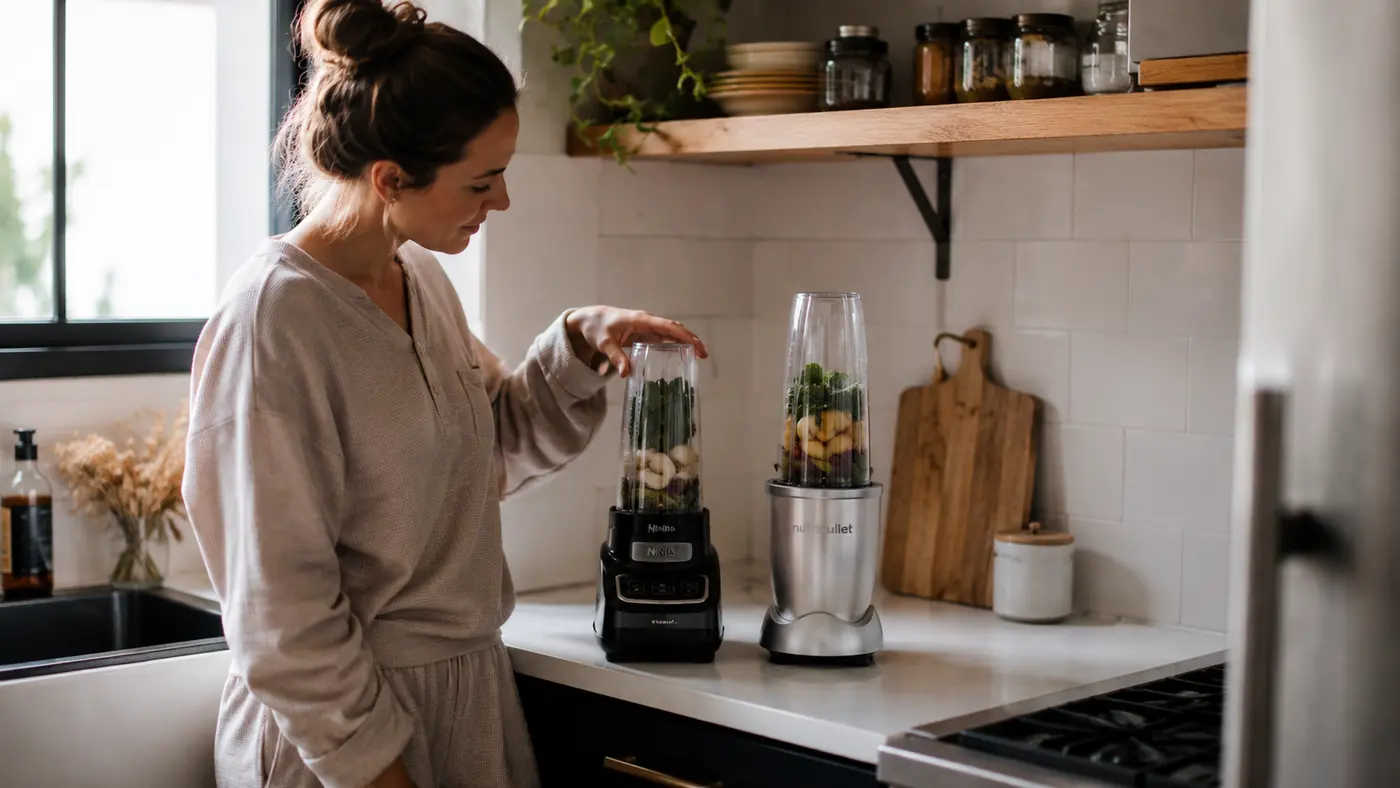
Short answer, if you only have a minute: for a small kitchen where counter space and cabinet room are the real constraint, the Magic Bullet Blender is the one I'd tell you to buy. I've had mine on my counter for months, my partner Danny uses it most mornings for his protein shake, and it has never once felt like it was competing for space the way some of my other appliances do. NutriBullet is a genuinely good blender and I'm not going to pretend otherwise in this comparison, but it asks for more counter clearance and a taller cabinet gap than my galley kitchen has to offer, and that difference matters more than a spec sheet suggests once you actually live with either one.
Both are personal blenders built around the same basic idea: a small motor base, a cup that locks on and doubles as your drinking vessel, and a blade built for smoothies rather than soup or dough. The differences show up in the details, motor power, how many pieces you get, how tall the thing stands when it's parked on your counter, and how it handles a cup packed with frozen fruit. I'll walk through all of that below, and I'll be honest about where NutriBullet actually pulls ahead, because a fair comparison is more useful to you than a one-sided sales pitch.
| Spec | Magic Bullet | NutriBullet |
|---|---|---|
| Motor Power | 250 watts | 600 watts on the Original NutriBullet |
| Included Pieces | 11-piece set: tall cup, short cup, party mug, blade, stay-fresh resealable lids | Base kit typically ships with 2 cups, 1 blade, and a flip-top lid, fewer pieces overall |
| Base Height on Counter | About 8 inches tall with the short cup attached | About 14 inches tall, needs real clearance under a cabinet |
| Cup Capacity | 18 oz tall cup and 8 oz short cup | 24 oz single cup size |
| Frozen Fruit and Ice | Handles a few ice cubes fine, a full cup of frozen fruit takes patience and pulsing | Chews through a packed cup of frozen fruit and ice in one cycle without stalling |
| Noise Level | Quieter, a short 10 to 15 second hum per cycle | Noticeably louder, a higher-pitched motor whine for a similar cycle |
| Cleanup and Storage | Cups double as storage containers with resealable stay-fresh lids for leftovers | Cups are built mainly for drinking, no dedicated storage lid in the base kit |
| Counter Footprint | About 5 inches in diameter at the base | About 6.5 inches in diameter, wider clearance needed on both sides |
Where Magic Bullet Wins
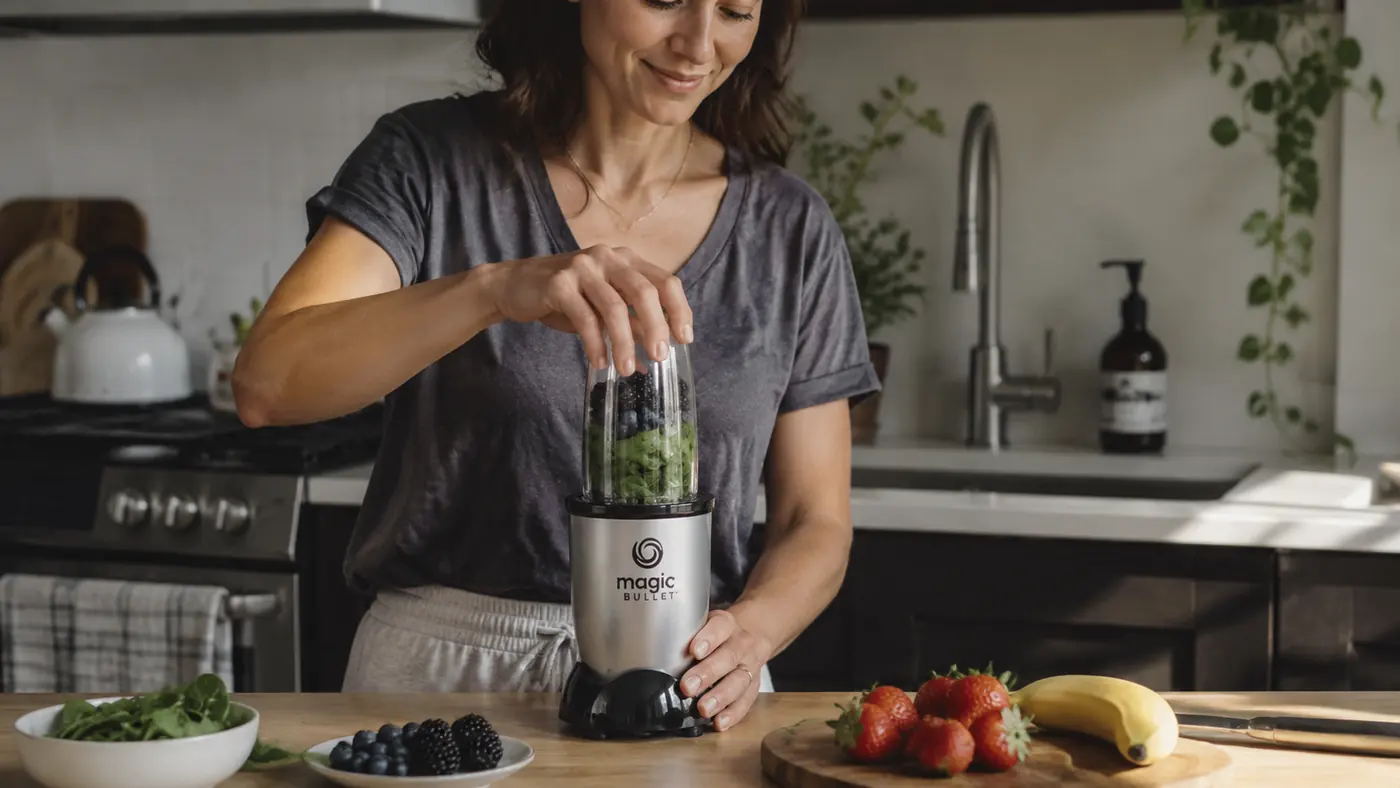
The single biggest reason the Magic Bullet has stayed on my counter instead of migrating to a cabinet is its height. At roughly 8 inches with the short cup locked on, it tucks under my upper cabinets with room to spare, and I never have to slide it out just to open a cabinet door above it. That sounds like a small thing until you've owned an appliance that's a fight to use every single time because it's an inch too tall for where you actually want to keep it. My kitchen has two outlets and about three feet of usable counter, and the Magic Bullet takes up a footprint about the size of a coffee mug when it's sitting idle between the tall cup and the short one.
The 11-piece set is the other place Magic Bullet earns its keep. I use the short cup most mornings for a quick smoothie, and the tall cup on weekends when Danny and I are making two servings at once. The stay-fresh resealable lids mean if I only drink half a smoothie before heading out, I can seal the cup and put it straight in the fridge instead of dirtying a second container. NutriBullet's base kit doesn't include an equivalent storage lid, so you're either drinking the whole thing in one go or transferring it to something else, which is one more dish to wash in a kitchen where I'm already trying to keep the sink from filling up by 9am.
The party mug that comes in the Magic Bullet set gets used more than I expected too. It's the odd piece out on paper, but in a kitchen this small it's become a second travel cup for whichever one of us is running out the door with a smoothie half finished. I didn't buy anything extra to make that work, it just came in the box. Multiply that across a set that already includes two cup sizes, two lid styles, and a blade, and you end up with a system that flexes to whatever the morning actually needs instead of locking you into one cup, one lid, one way of using it.
It's also quieter, which matters more than I expected before I actually lived with it. My kitchen shares a wall with the bedroom, and a blender that runs for 10 to 15 seconds with a manageable hum is a very different morning experience than one that sounds like it's trying to take off. If you're in an apartment with thin walls, or you're making a smoothie before anyone else in the house is awake, that difference is real. For a closer look at how I've used mine day to day, I wrote a full long-term Magic Bullet review covering six months of actual mornings with it.
Where NutriBullet Wins
I'd be doing you a disservice if I pretended NutriBullet doesn't have real advantages, because it does, and the biggest one is raw blending power. The 600-watt motor on the Original NutriBullet chews through a cup packed with frozen fruit and ice in a single cycle, no pulsing, no stopping halfway through to shake the cup and redistribute the chunks. The Magic Bullet's 250-watt motor can handle a few ice cubes without complaint, but load a cup with mostly frozen mango and strawberries straight from the freezer and you'll be pulsing it in short bursts and shaking the cup between rounds to keep the blade from just spinning on top of a solid block. If your smoothie routine leans heavily on frozen fruit rather than fresh, that extra power is worth something real.
NutriBullet also has the edge if you want a single larger cup rather than a two-cup system. The 24-ounce cup covers more ground in one pour if you're making a bigger single serving instead of splitting a smoothie between a tall cup and a short cup the way the Magic Bullet setup encourages. And because the motor base is taller and the blade assembly is built for tougher jobs, some people find it handles things like nut butters or thicker frozen desserts a bit more confidently than the Magic Bullet's lighter-duty motor. None of that makes it the better choice for every kitchen, but if power and single-cup capacity matter more to you than footprint, it's a fair tradeoff to weigh.
If Counter Space Is the Real Constraint, Not Blending Power
The Magic Bullet gives up some raw power for a footprint that actually fits a narrow counter and tucks under a cabinet without a fight. That's been the right trade for my kitchen.
Amazon Check Today's Price on Amazon →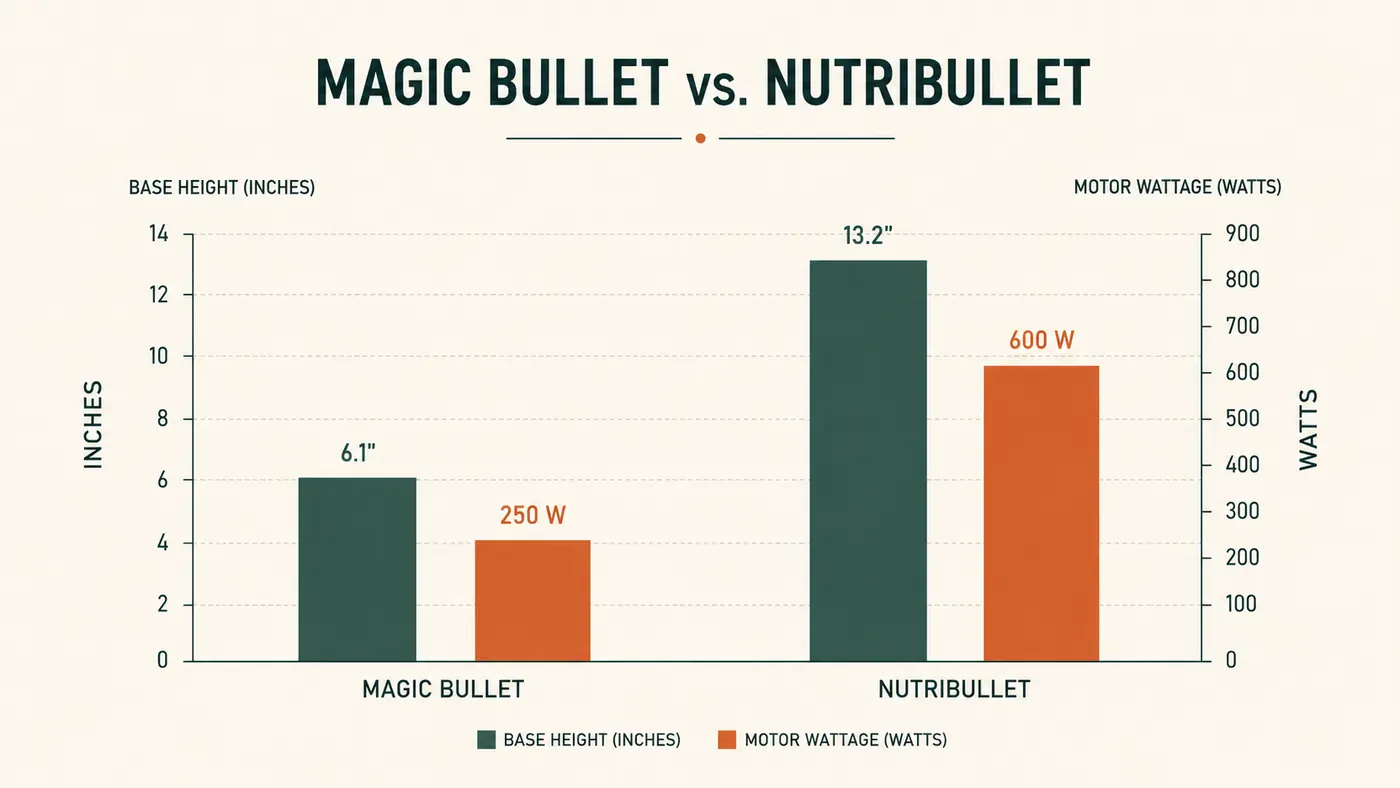
How This Plays Out Day to Day
In practice, the power gap shows up less often than the spec sheet makes it sound. Most mornings I'm blending fresh spinach, a banana, some yogurt, and maybe a small handful of ice, not a cup packed solid with frozen fruit straight out of the bag. The Magic Bullet handles that combination without any pulsing or babysitting, and honestly most weeks I forget the power difference exists at all. It's only on the days Danny wants a thicker, colder shake with a full cup of frozen mango that I notice the Magic Bullet needs a second short cycle to catch up, and even then it's a matter of ten extra seconds, not a real problem.
The footprint difference, on the other hand, shows up every single day whether I'm blending anything or not. The Magic Bullet sits on my counter between the coffee maker and the spice rack without crowding either one, and I never have to move it to reach a cabinet. When I borrowed a friend's NutriBullet for a week to test this comparison properly, I had to relocate it to the top of the fridge between uses because it was too tall to sit under my cabinets and too wide to share the counter space I actually have. That's the tradeoff in one sentence: NutriBullet wins on power, Magic Bullet wins on actually fitting the kitchen I have.
Cleanup told a similar story that week. Rinsing the Magic Bullet's cup and blade takes about a minute at the sink, and because the cups are dishwasher-safe on the top rack, I usually just drop them in with the rest of the dinner dishes instead of hand-washing separately. The borrowed NutriBullet's taller cup was awkward to rinse in my shallow apartment sink, since it barely cleared the faucet without tipping. It's a small annoyance on its own, but it's the kind of small annoyance that adds up over weeks of daily use in a kitchen that wasn't built with a tall blender cup in mind.
Who Should Buy Which
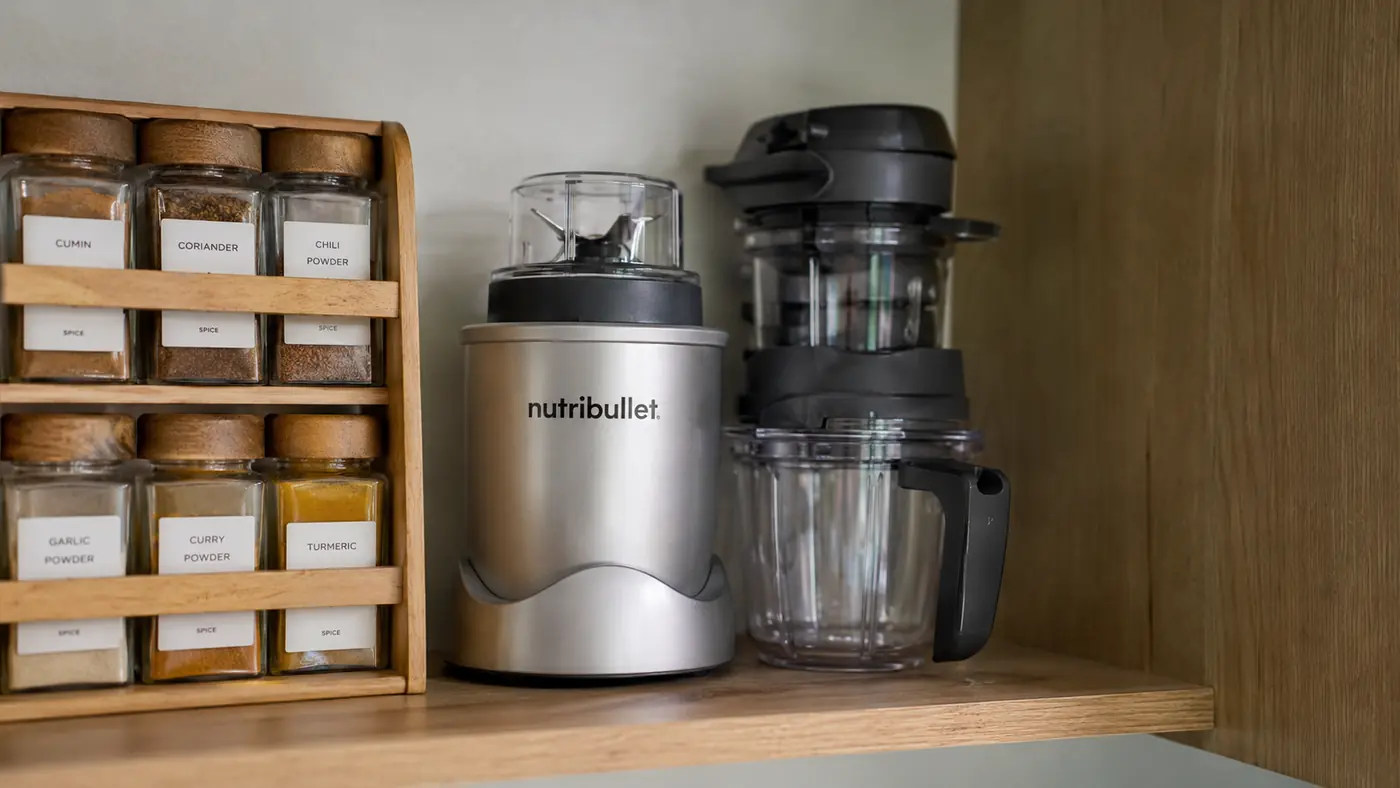
If your kitchen has real counter constraints, a narrow galley layout, limited cabinet clearance, or you're working with dorm-room or RV-sized space, the Magic Bullet is the more livable choice. It's the one that actually gets used every day instead of getting shoved to the back of a cabinet because it doesn't fit anywhere convenient. It's also the better pick if your smoothies lean more toward fresh ingredients with a bit of ice rather than fully frozen fruit, and if having a resealable storage lid for leftovers matters to your routine. I go into more detail on exactly who this fits best in my honest Magic Bullet review, including the tradeoffs nobody mentions in the marketing copy.
If you regularly blend a full cup of frozen fruit or ice and you have the counter and cabinet clearance for a taller base, NutriBullet's extra power is going to save you real time and frustration. It's a legitimately good blender, and for a bigger household or a kitchen with more room to spare, the tradeoff toward power over footprint might make more sense than it does for mine. For my three feet of counter and two outlets, though, the math keeps coming back to the one that actually fits, and that's why the Magic Bullet is still the blender sitting on my counter today.
Still the One That Fits My Counter
For a small kitchen where every inch of counter and cabinet clearance counts, the Magic Bullet has been the personal blender that actually stays out and gets used.
Amazon Check Today's Price on Amazon →