
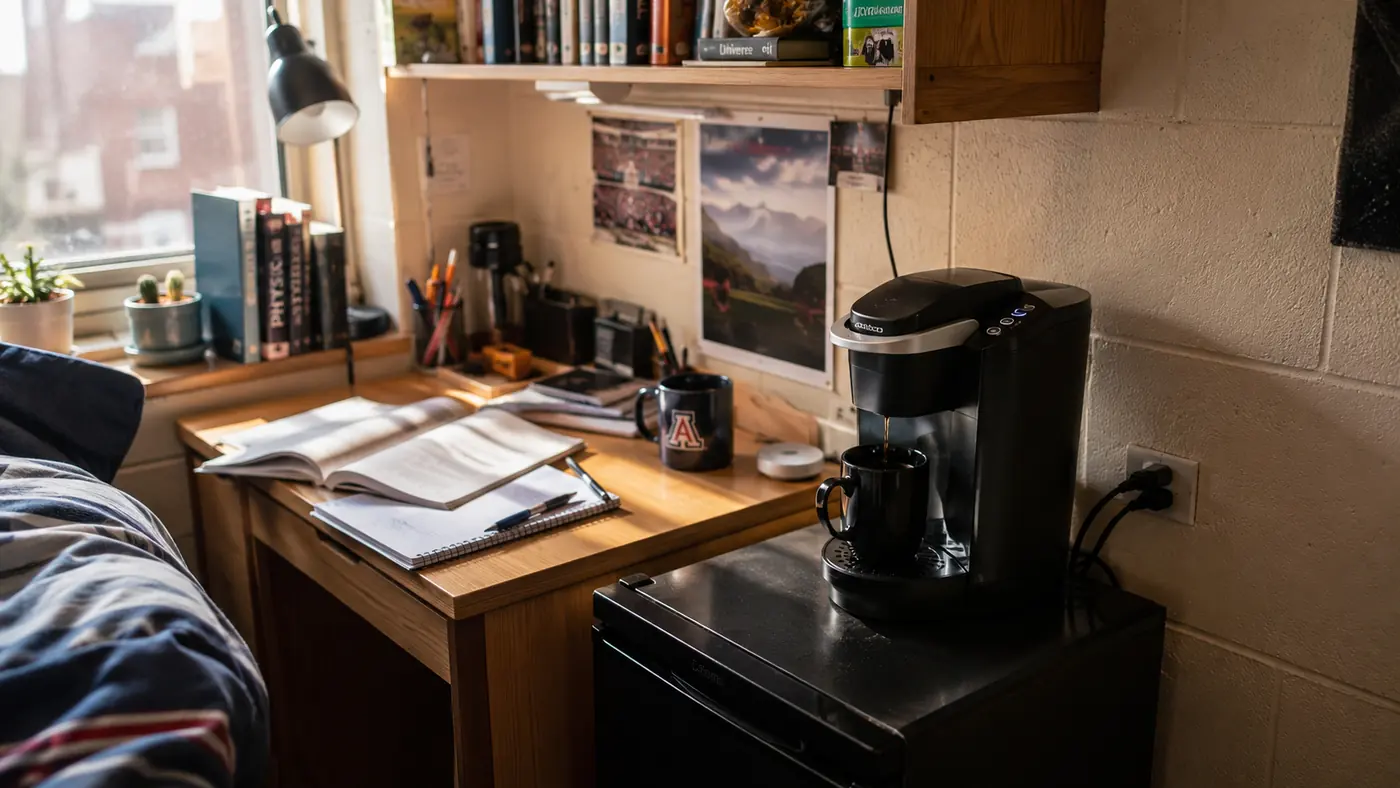
My niece Maya moved into her freshman dorm in August, and about an hour into unpacking she turned to me and asked how she was supposed to make coffee with no kitchen, one outlet on her side of the room, and a strict list of banned appliances taped to the inside of her closet door. I've spent twelve years figuring out how to cook and brew in a 500-square-foot apartment with two outlets and three feet of usable counter, so this was familiar territory even if the room was smaller than my kitchen. We ended up going with a Keurig K-Mini Mate, and after helping her run it through its first week of actual use, I wrote down the exact steps that got her from a bare desk to a working coffee setup that her RA never blinked at.
If you're trying to figure out how to brew coffee in a dorm without breaking a housing rule or tripping a breaker, this is the walkthrough I wish someone had handed us before move-in day. It's not theoretical. This is the setup Maya is still using, and the same logic applies whether you're in a dorm, a studio apartment, or an RV, any small space where counter room and outlet access are the real limiting factors, not your coffee taste. Danny actually came along for the move-in weekend too, mostly to carry boxes up three flights of stairs, but he ended up being the one who tested the fit of the outlet strip before we plugged anything in, which turned out to matter more than either of us expected.
The One Appliance That Passed Every Dorm Rule on Her List
Most coffee makers either draw too much power for a shared circuit or take up more desk space than a freshman dorm room has to spare. This is the one that fit both problems at once.
Amazon Check Today's Price on Amazon →Step 1: Check Your Dorm's Appliance Rules and Outlet Limits Before You Buy Anything
Before we bought anything, Maya pulled up her housing handbook and read the small appliance section out loud. Most dorms cap wattage on anything with a heating element, usually somewhere around 1000 to 1500 watts per device, and a lot of them flat-out ban hot plates, space heaters, and full-size coffee makers with exposed heating elements or open carafes. Single-serve pod machines tend to clear that bar because they draw power in short bursts to heat a small amount of water rather than keeping a full pot hot for hours. Read your own handbook rather than assuming, because rules vary by school and sometimes by building, but this is the category that survives most lists.
The outlet situation matters just as much as the wattage rule. Maya's room had one outlet strip shared between her desk lamp, her laptop charger, and whatever she wanted to add, so anything with a bulky plug or a permanent power draw was going to be a problem before she ever brewed a cup. We measured what was left on the strip and confirmed the Keurig K-Mini Mate's cord and plug wouldn't crowd out the other essentials, which is the same math I do in my own kitchen every time something new comes in. Her roommate had already claimed the second outlet strip for a mini fridge and a desk fan, so there genuinely wasn't room for negotiation, just planning around what was left.
Step 2: Pick a Spot That Actually Has Room and Water Access
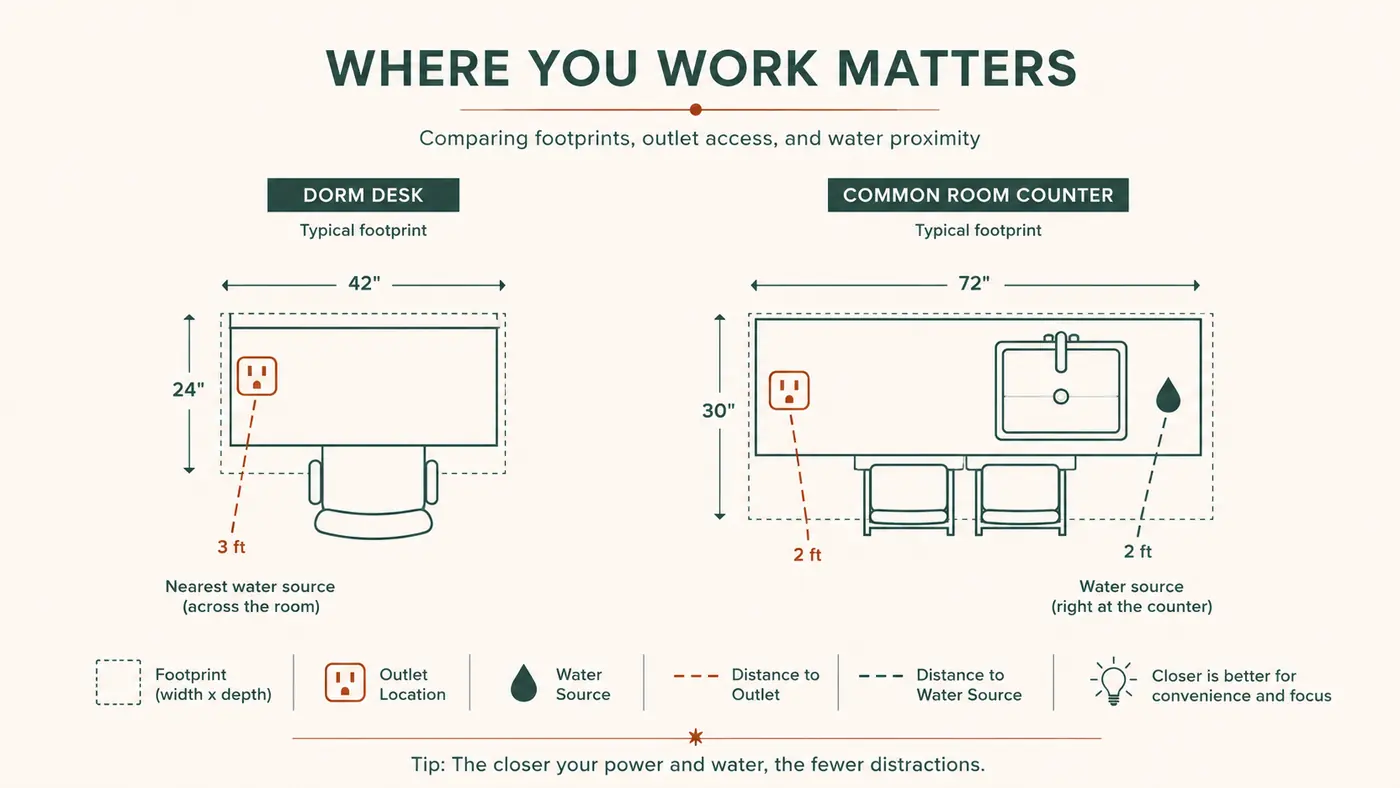
Dorm desks are not kitchen counters, and the biggest mistake I see people make is buying a coffee maker sized for a real kitchen and then discovering it eats the only flat surface they have for studying. We measured the corner of Maya's desk before ordering anything, the same way I measure my own three feet of counter before I let a new appliance into my apartment. The K-Mini Mate's footprint turned out to be small enough to sit in that corner without covering her outlet strip or blocking her desk lamp, which was the deciding factor over a couple of other machines she'd been considering.
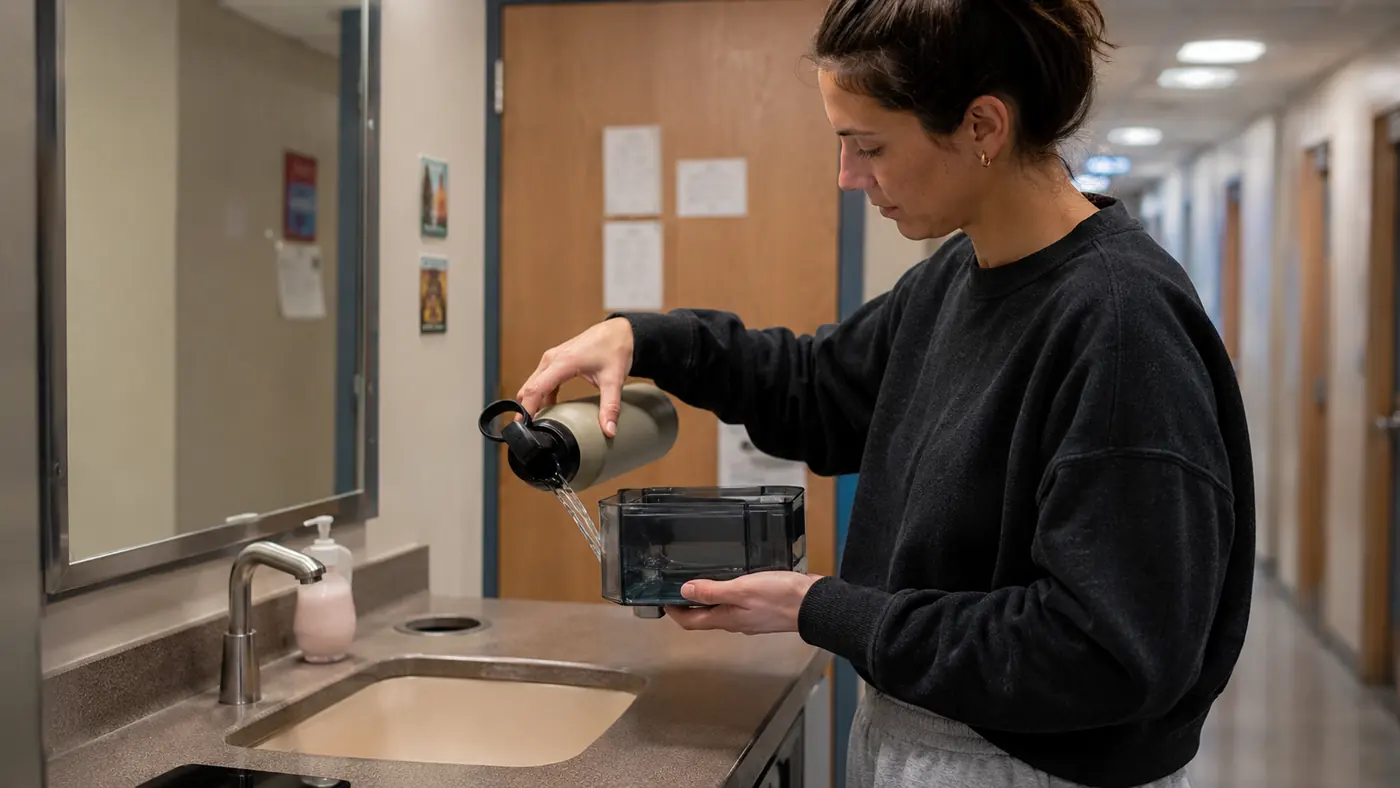
Water access is the part people forget to plan for. There's no sink in most dorm rooms, so filling a coffee maker means walking down the hall, filling a bottle, and carrying it back. We picked a spot on her desk close enough to the door that the walk to the communal bathroom sink didn't feel like a chore every morning, and she keeps a dedicated one-liter reusable bottle just for refilling the reservoir so she's not using her drinking water bottle for both jobs. If your building has a shared common room with a kitchenette instead of a communal bathroom sink, that changes the math slightly, since you're weighing a longer walk against a real water source, but the same reservoir-refill habit applies either way.
Step 3: Set Up the Reservoir and Do a Water-Only Test Brew
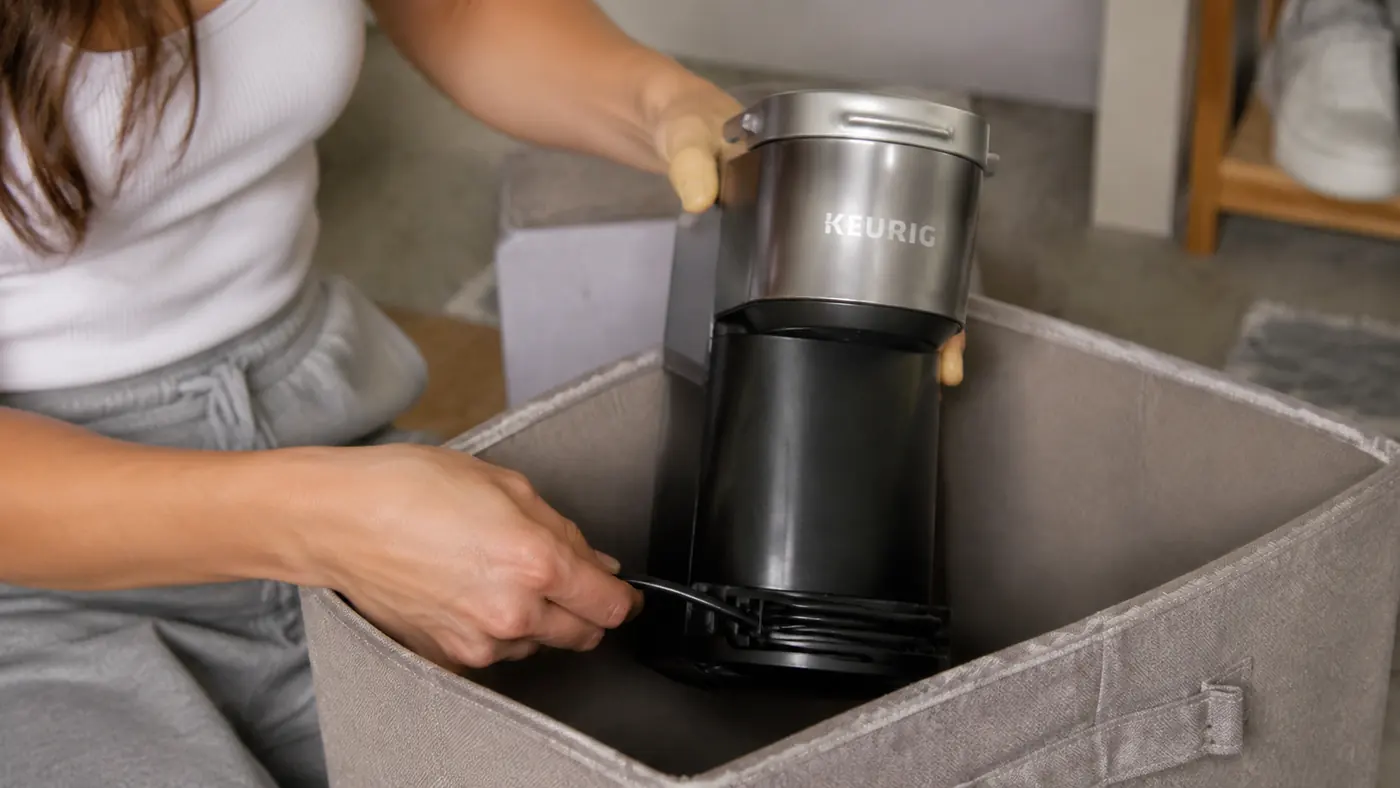
Once the Keurig was on the desk and plugged into the outlet strip, the first thing we did was run one full cycle with just water, no pod, before making an actual cup. This flushes out anything left over from manufacturing and lets you confirm the machine is heating and dispensing correctly before you're standing there half awake at 7 a.m. hoping it works. It's a two-minute step that most people skip, and it's saved me from a couple of disappointing first mornings with new appliances in my own apartment.
This is also the moment to figure out where the water level markings are and how far you can fill the reservoir without it splashing when you carry the machine to refill it, since in a dorm you're moving the whole unit to the sink rather than running a hose to it. Maya learned quickly that filling it about three-quarters of the way, rather than to the very top, kept her from sloshing water onto her desk on the walk back from the bathroom.
Step 4: Choose Your Pod Size and Learn the Water-to-Coffee Ratio
The K-Mini Mate brews a single cup at a time with no size selector dial, which sounds limiting until you realize that's exactly the point in a dorm setting: less to figure out, less that can go wrong at 7 a.m. between classes. Maya started with a variety pack of standard K-Cup pods and figured out within a few days which roast she actually reached for versus which ones sat in the drawer. If you like a stronger cup, using a smaller mug concentrates the same pod into less water, which is the easiest adjustment to make without buying specialty pods or extra equipment.
One thing worth knowing going in: this machine doesn't have a built-in reservoir gauge that tells you exactly how many cups are left, so Maya got into the habit of topping it off the night before an early class rather than discovering it's empty while she's already running late. That single habit change removed almost all of the friction from her morning routine, and it's the same habit I've had to build into my own apartment routine with appliances that don't have a clear fill line visible from across the room.
Step 5: Build a Cleaning Routine That Doesn't Need a Real Sink
Cleaning a dorm coffee maker without a kitchen sink takes a little more planning than it does in my apartment, where I can rinse things at the tap whenever I want. Maya's routine is to remove the used pod after each brew, wipe the drip tray with a paper towel a couple times a week, and carry the removable water reservoir to the hallway bathroom for a rinse about once a week, or sooner if she notices any buildup. The whole thing takes under five minutes and doesn't require anything more than what's already in a standard dorm shower caddy.
Descaling is the step people forget entirely, dorm or apartment. Every month or so, running a cycle of equal parts water and white vinegar through the machine, followed by two or three plain water cycles to rinse it out, keeps mineral buildup from affecting how it heats and how the coffee tastes. Maya set a recurring reminder on her phone for the first of the month, which has been enough to keep it from slipping through the cracks of an actual semester schedule. She told me over Thanksgiving break that she almost forgot the first month, and the coffee came out noticeably slower and slightly off, which was enough of a reminder on its own to keep the habit going after that.
What Else Helps
A few small things made the whole setup work better than just plugging in the machine and hoping for the best. A cheap surge protector strip with individual switches let Maya turn the Keurig off completely when she leaves for class, which some housing rules actually require and which also just felt like the responsible move in a shared building. A small tray under the machine caught the inevitable drips and kept her desk from developing a permanent water ring. And keeping the pod variety pack in a small drawer organizer instead of a loose box on the desk turned out to matter more than either of us expected, since desk space in a dorm disappears fast once textbooks show up.
If your room has a mini fridge, the top of it can be a better home for a coffee maker than the desk itself, since it frees up study space and often sits closer to an outlet strip anyway. Maya ended up moving hers there in October once she realized how much desk real estate she'd been giving up. If you're weighing this machine against other compact options before you commit to one, I broke down the tradeoffs against a similar-sized alternative in Keurig K-Mini Mate vs. Nespresso Vertuo, and I wrote up how it's held up after months of regular use in my long-term Keurig K-Mini Mate review.
The question was never whether Maya could make good coffee in a dorm room. It was whether the machine would fit the space and the rules without either of us thinking about it every single morning.
Coffee makers built for a full kitchen counter almost never survive the move to a dorm room, not because they can't make coffee, but because they demand a kind of space and outlet access that just doesn't exist there. The Keurig K-Mini Mate has worked for Maya specifically because it never asked her room to accommodate it. It fit into the space and the rules that were already there, which is the same standard I hold every appliance to in my own apartment, dorm-sized kitchen or not. Whether you're the one heading off to school or you're the relative helping someone pack, that's the question worth answering before anything else goes on the desk.
The Setup That Passed Move-In Day and Every Morning Since
If you're trying to solve the same problem we solved on move-in day, one outlet, no sink, and a strict appliance list, this is the machine that made it simple.
Amazon Check Today's Price on Amazon →